 SoundLuma
How to Turn a Story into a Song
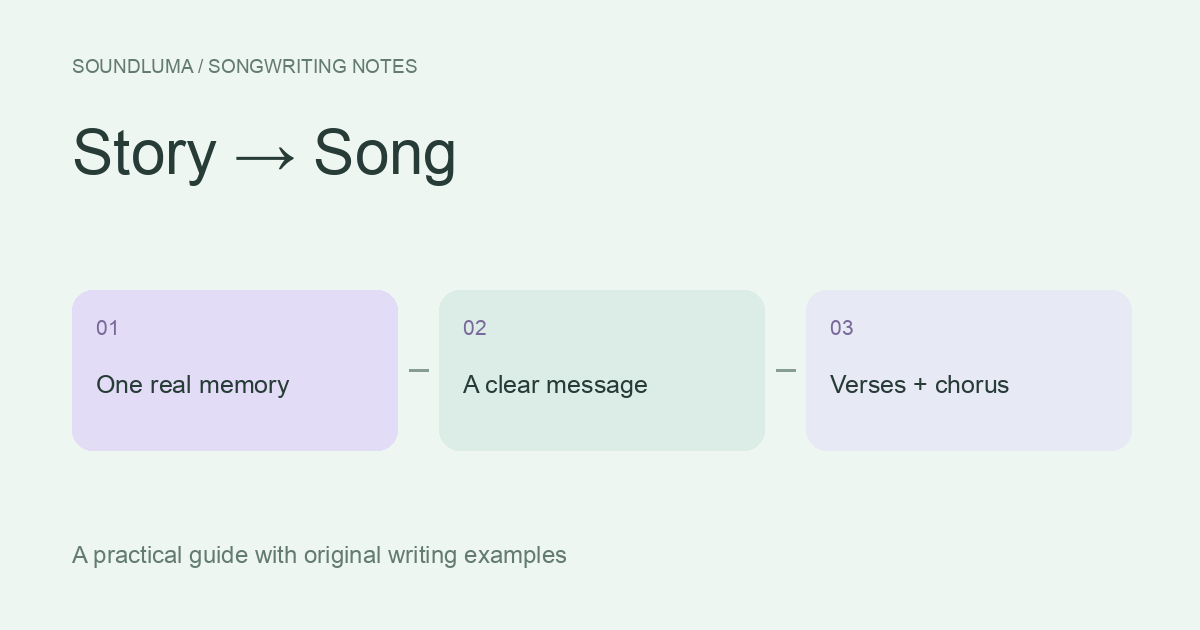
To turn a story into a song, choose one meaningful moment, describe what changed, and build a chorus around the feeling you want to leave behind. A song does not need every event in the story. It needs enough recognizable detail for the listener to feel why the moment matters.
This guide uses an original fictional example: two friends miss the last bus after moving to a new city. One shares a blue umbrella. That ordinary evening becomes a story about finding belonging. You can prepare the same kind of brief in the SoundLuma song workspace, which currently supports text preparation rather than audio generation.
Key takeaways
- Pick one scene and one emotional change before choosing a music style.
- Keep names, places, and concrete details that the recipient will recognize.
- Review lyrics before making music; a factual error can survive into every chorus.
Start with a moment, not a biography
Write a paragraph answering four questions: Who is the song for? Where were you? What happened? Why does it matter now? Use your normal speaking voice. You can edit the wording later.
For example: “Sam and I had just moved to the city. We missed the last bus after our first week at college. Sam shared a blue umbrella and made me laugh all the way home. I want this song to thank them for making the city feel less lonely.”
That paragraph contains a setting, an action, a recognizable object, and a reason to sing. A list of every school, job, and holiday would offer more information but less direction. If you need several memories, choose one as the opening scene and save the others for later verses.
Separate the story from its message
The event is missing the bus. The message is “you made a strange place feel like home.” Put the message in a short sentence before attempting rhyme. That sentence is your chorus brief.
A useful planning map is: verse one shows the unfamiliar city; the chorus thanks the friend; verse two shows how the friendship continued; the final chorus returns to the same central thought. This is a writing option, not a mandatory song structure. A short dedication might need only one verse and a chorus.
Turn details into singable lines
Move from explanation to a scene the listener can picture. Instead of “you were a supportive friend during a difficult transition,” try “you held the blue umbrella wide.” The second line gives the singer an action and the listener an image.
Original draft lines might read:
We watched the last bus disappear
You held the blue umbrella near
A city full of streets unknown
You laughed, and it began to feel like home
These are illustrative lyrics, not the transcript of a generated song. Keep any line that sounds like you, and rewrite details that do not fit your experience. See the lyrics preparation guide for section labels and a revision checklist.
Add musical direction without burying the story
Give the music service a separate style description: “Warm acoustic pop, conversational vocal, gentle guitar, hopeful chorus, no long instrumental opening.” Keep production instructions out of the lyric lines unless your chosen service documents a specific instruction format.
Choose a mood that suits the recipient. An upbeat reunion song and a quiet thank-you can use the same memory but need different arrangements. You do not need to name a famous singer to describe warmth, tempo, instrumentation, or vocal energy.
Review the words before generating audio
Check names, dates, pronouns, and who did what. Read the lyric aloud and listen for sentences that need too much explanation. A chorus should still make sense if someone hears it without the verses.
Ask whether any detail is too private to share. A song for one friend may include a joke that would be uncomfortable on a public gift page. Keep a private version and a public version if necessary; do not assume that uploading a story automatically makes it suitable for publishing.
What should you do if the story feels too long?
Keep one scene, one object, and one message. Save the full prose as background material, then write a shorter lyric brief. For a relationship story, the love song guide shows how to connect an early memory to a present-day promise. For a friend, use the friendship song prompts.
When the brief reads clearly, choose a music service that supports your intended input and review its current generation and download options. SoundLuma's workspace can organize and export your text brief; it does not yet turn that brief into audio.